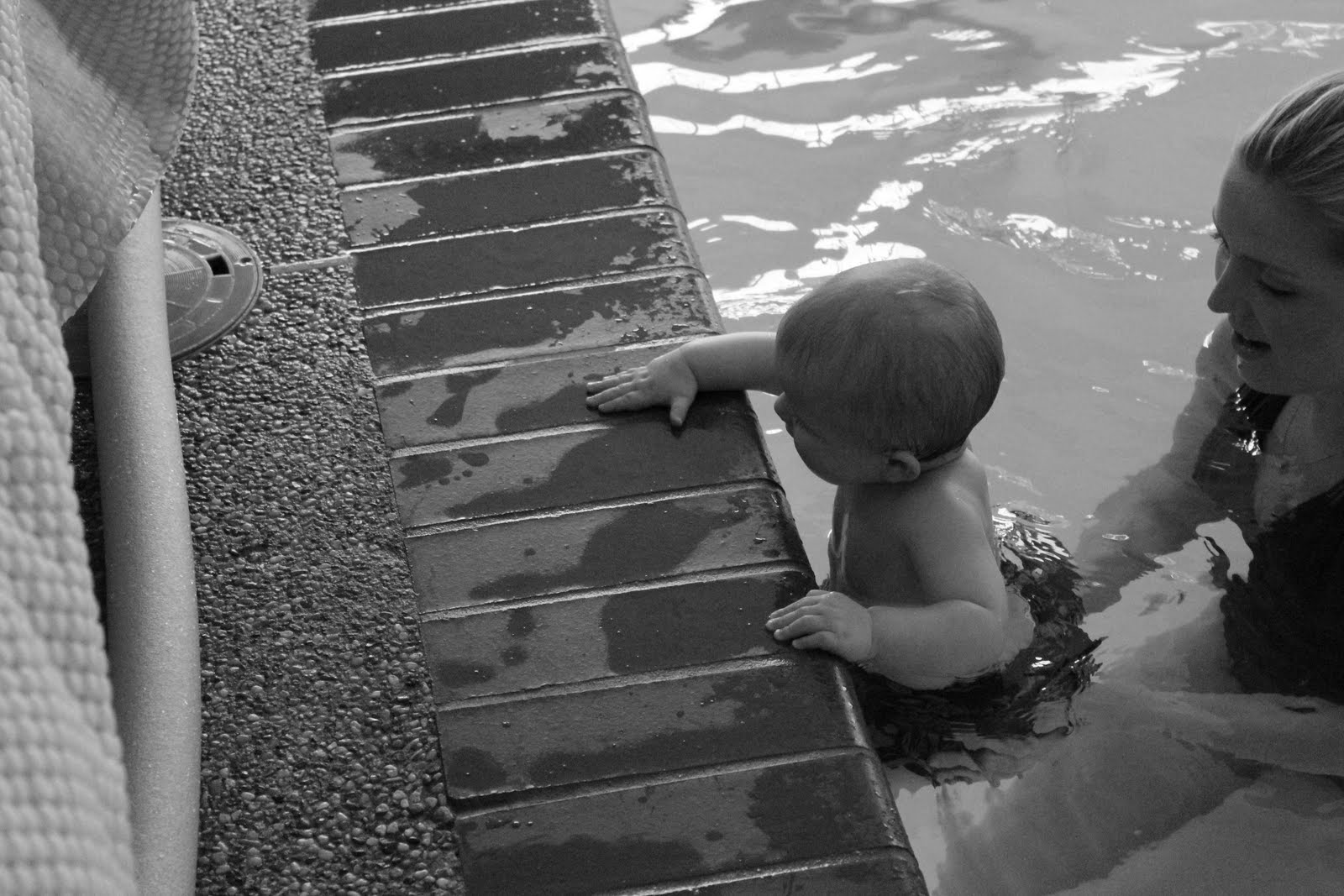
I've started reading and researching different methods of discipline. Jaxson is one year old and knows exactly how to push my buttons. He knows the word "NO" and that he shouldn't be doing something when I yell it but so far this "NO" word that he keeps hearing coming from my mouth doesn't result in any consequences.
con·se·quence
[kon-si-kwens, -kwuh ns]
–noun
1.
the effect, result, or outcome of something occurring earlier
I had to look up the word consequence in the dictionary because I know it was a result of something happening but my suspicions are correct. A consequence doesn't always have to be BAD. In the disciplining world, however, it does.
As a child and through my adolescent and early 20 something years, I swore that I would have a different approach at discipline than my parents did. My philosophy was "let them figure out that bad choices come with bad consequences" on their own. This philosophy has come to a complete HALT now that my child is alive. Today I briefly browsed the internet to find articles on discipline a one year old. If other people have good ideas, I shouldn't have to reinvent the wheel on this. My thoughts are rapidly changing after reading the first article. Let me summarize......
"Ages 0 to 2
Babies and toddlers are naturally curious. So it's wise to eliminate temptations and no-nos — items such as TVs and video equipment, stereos, jewelry, and especially cleaning supplies and medications should be kept well out of reach."
PULHEASE!!! You are telling me that I need to pack my house up in a box and live with NOTHING. I have successfully kept him away from medications and housecleaning supplies with cabinet locks and catches but the TV...really?
"When your crawling baby or roving toddler heads toward an unacceptable or dangerous play object, calmly say "No" and either remove your child from the area or distract him or her with an appropriate activity."
What am I supposed to do know...I've removed him from the area but I'm still needing what to do next.....hello???
"It's important to not spank, hit, or slap a child of any age. Babies and toddlers are especially unlikely to be able to make any connection between their behavior and physical punishment. They will only feel the pain of the hit."
I guess nobody showed this article to my Dad when I was younger. Pain was his middle name....I'm pretty sure I knew the difference between pain from my behavior and physical punishment though. And let me also add this….if they didn’t feel the pain from the hit, they won’t remember the CONSQUENCE from their action.
This article was no help.
On to Dr. Phil’s advice.
1. Commit Yourself: It's crucial that your child knows that you're going to do what you say you will. If you explain what a punishment will be, and then don't act on it, you will have less credibility the next time. Make a commitment to your child's discipline, and be consistent in your behavior toward them.
YES!!! I just told Landon yesterday that WE need to be consistent with me telling Jaxson “NO” on certain behaviors, i.e. squirting your sippy cup of water on the mat by the back door.
2. Be Realistic in Your Expectations of Your Child.
Don't ask your child to do anything he/she cannot do. Make sure that what you are asking of your child is a behavior within his or her reach — if it's not, your child will get frustrated and be less likely to listen to you in the future.
2. Be Realistic in Your Expectations of Your Child.
Don't ask your child to do anything he/she cannot do. Make sure that what you are asking of your child is a behavior within his or her reach — if it's not, your child will get frustrated and be less likely to listen to you in the future.
Ok Dr. Phil I will remember this in about a year.
3. Define Your Child's Currency.
Find out what your child values — it could be a toy, a particular activity, or even a privilege like getting to stay awake to a particular hour. Dr Phil explains: "If you control the currency, you control the behavior that currency depends on." Once you understand what your child values, you can withdraw positive things (taking away the toy) or introduce negative things (making them take a time-out) as a form of discipline.
3. Define Your Child's Currency.
Find out what your child values — it could be a toy, a particular activity, or even a privilege like getting to stay awake to a particular hour. Dr Phil explains: "If you control the currency, you control the behavior that currency depends on." Once you understand what your child values, you can withdraw positive things (taking away the toy) or introduce negative things (making them take a time-out) as a form of discipline.
Still trying to figure this one out. I know Jaxson values his baseball. But if I take that away, he still has a bagillion more toys to pick from.
4. Give Your Children Predictable Consequences.
It's important for your child to understand that the same result will come from the same behavior. Make your child feel like he/she has control over their life: If your child behaves in "Way A," they need to be sure that they will always get "Consequence B." If he/she can count on the rules staying the same, they're more likely to abide by
them.
This sounds like a tag-along to pointer #1.
I’m a pushover when it comes to my child. He has this look on his face that says..”Mommy I’m sorry and I promise to never do it again…until you’re not looking”. I have one hope when it comes to disciplining my children (I’m making this plural because I’m assuming there will be more in the future). I hope that I can stand firm with my rules and not give to way to cute little boys that try to make it all go away by hugging my legs.